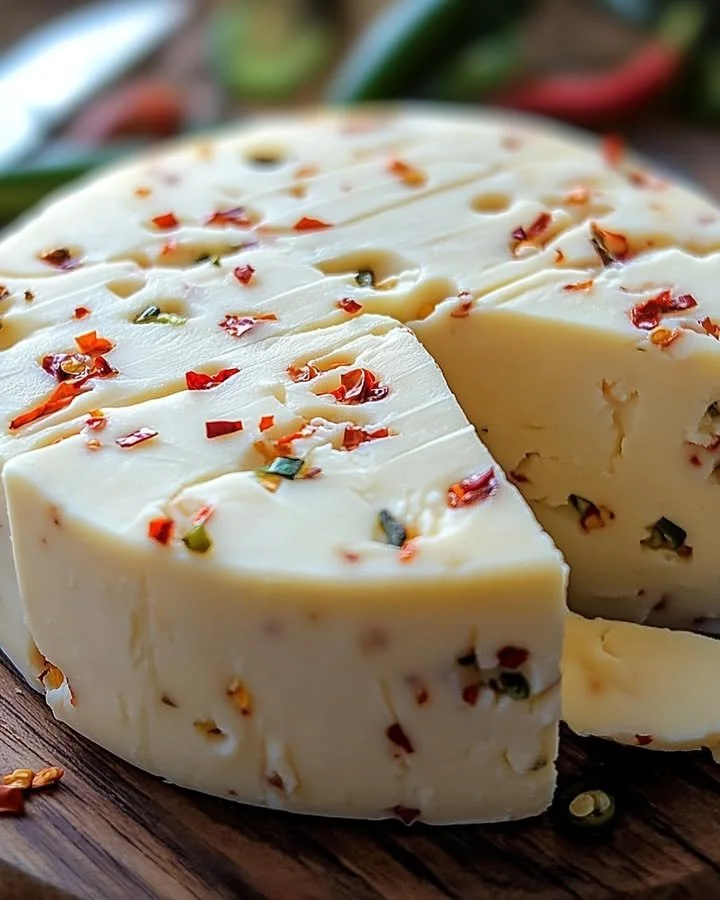
How to Make Pepper Jack Cheese at Home
The delightful Pepper Jack Cheese is a creamy, zesty treasure that tantalizes the taste buds. This recipe invites you to embark on a step-by-step journey of cheese-making that fills your kitchen with rich aromas and textures that are simply irresistible. Imagine the silky strands of cheese melting in your mouth, combined with the gentle heat from jalapeños, creating an explosion of flavors that dance on your palate. The joy of transforming simple ingredients into a luscious cheese is not only rewarding but also deeply satisfying. Let’s dive in!
History / Fun Fact
Pepper Jack Cheese has its roots in the Monterey region of California, where cheese artisans began enhancing their traditional Jack cheese with spices and herbs. The addition of peppers, particularly jalapeños, gives it the signature heat and flavor that has become beloved in Mexican cuisine and beyond. This cheese reflects the rich biodiversity of California’s agricultural heritage, and it embodies the spirit of culinary innovation. Today, Pepper Jack has transcended its humble beginnings, evolving into a staple in many households around the world.
Ingredients
To embark on your Pepper Jack Cheese-making adventure, you’ll need the following ingredients:
1 gallon whole milk (preferably raw or pasteurized, NOT ultra-pasteurized): This creamy base is essential for a luscious cheese with a smooth texture.
1/4 tsp mesophilic starter culture: These tiny cultures work wonders by adding complexity and flavor to your cheese.
1/2 tsp liquid calcium chloride (if using pasteurized milk): This ingredient helps to restore the calcium balance in pasteurized milk, ensuring your curds form properly.
1/2 tsp liquid rennet (diluted in 1/4 cup non-chlorinated water): Rennet brings the curds together, creating that beautiful block of cheese we all crave.
1 tsp non-iodized salt (cheese salt or kosher salt): Salt enhances the flavor and aids in the aging process, keeping your cheese safe and delicious.
2 tbsp diced jalapeños (fresh or pickled): These vibrant pieces add a delightful kick and a pop of color, elevating your cheese to something truly special.
1 tbsp red pepper flakes: For those who like it hot, these flakes will intensify the flavor and heat profile.
1 tsp black pepper (optional, for extra depth): Adding black pepper enriches the complexity of flavors in your cheese.
Cooking Time & Tips for How to Make Pepper Jack Cheese
Cooking your Pepper Jack Cheese can take time, but the result is worth every minute. A quick preparation might yield a flavorful cheese, but taking your time lets the flavors develop richly. Aim for a total time of around 30 minutes for actively cooking and an additional 24 hours for drying, followed by weeks of aging.
Practical tips for success include ensuring all your equipment is sanitized, using quality milk, and monitoring temperatures carefully. This attention to detail will yield a perfectly textured and flavored cheese!
Step-by-Step Directions
Pour the milk into a large pot and slowly heat it to 90°F (32°C), stirring gently. The creamy milk will begin to warm and release delightful aromas. Add the mesophilic starter culture and let sit for 2 minutes, allowing the cultures to invigorate the milk. Stir to mix, bringing everything together.
If you’re using pasteurized milk, stir in the calcium chloride. Now, add the diluted rennet and stir gently in an up-and-down motion for 30 seconds. Cover the pot and let the milk set undisturbed for 45 minutes. You’ll soon see the magic happen as a firm curd forms.
Using a long knife, cut the curd into 1/2-inch cubes. This is where the sensory experience intensifies; the smooth curds will transform as you cut through them. Let the curds rest for 5 minutes, then slowly heat the mixture to 105°F (40°C), stirring gently to prevent the curds from clumping together.
Line a colander with cheesecloth and drain the curds. Feel the texture of the curds as they run through your fingers. Now, stir in the salt, jalapeños, red pepper flakes, and black pepper, allowing the flavors to intertwine magnificently.
Transfer the curds into a cheese mold or lined container. Press them with 8-10 lbs of weight for 6-8 hours, flipping halfway through. This pressing helps to remove excess whey and shape the cheese.
Once the pressing is complete, remove the cheese from the mold and place it on a drying rack. Let it dry for 24 hours at room temperature. After drying, wrap it up and age in the refrigerator for 2-4 weeks, flipping it every few days to enhance its flavor.
Serving Suggestions & Occasions
Pepper Jack Cheese is incredibly versatile! Serve it on cheese boards with cured meats, fruits, and caramelized nuts for an impressive presentation. Melt it over quesadillas, nachos, or burgers for an extra layer of flavor. Its spicy kick makes it an ideal accompaniment for grilled foods, providing a perfect balance to smoky flavors. Casual get-togethers, family BBQs, or game-day celebrations are all prime occasions to feature this delightful cheese!
Common Mistakes for How to Make Pepper Jack Cheese
Many novice cheese makers struggle with temperature control during the curd formation process. It’s crucial to maintain the right temperatures to ensure proper curd texture. Additionally, some might forget to sanitize their tools, which is vital for preventing unwanted bacteria growth. Overheating the curds during the cooking phase can also lead you to an undesired outcome, as it may result in a rubbery cheese. Ensure you follow each step carefully for the best results!
Healthier Alternatives & Variations
For a lighter version, consider using low-fat milk, which still provides richness without as many calories. If you are looking to avoid the heat altogether, substitute the jalapeños with sweet bell peppers or herbs like dill or chives for a refreshing twist. Another exciting variation is to incorporate different spices, such as smoked paprika or garlic powder, adding layers of flavor that give your cheese a unique identity.
FAQs
Can I use non-dairy milk to make Pepper Jack Cheese?
Unfortunately, traditional cheese-making relies on animal milk’s unique properties, making non-dairy alternatives unsuitable for creating a rich cheese texture.How do I know if my curds have formed properly?
You should see clean separation between curds and whey, with firm and slightly springy curds when touched.Is it necessary to use calcium chloride?
Calcium chloride is recommended if using pasteurized milk since it helps restore calcium levels lost during the pasteurization process.What can I do if my cheese doesn’t set?
If your cheese doesn’t set after adding the rennet, it could be due to insufficient time or incorrect rennet temperature. Try again with fresh ingredients!Can this cheese be frozen?
While freezing can change the texture, it is possible. Wrap the cheese tightly and store it in an airtight container. Thaw in the refrigerator when ready to use.How long can I age my Pepper Jack Cheese?
You can age Pepper Jack Cheese for a minimum of 2 weeks. For more depth, aging up to 6 months can produce a robust flavor profile.
Conclusion
Now that you’re equipped with the knowledge on how to make Pepper Jack Cheese at home, there’s no better time to dive into this culinary adventure! Embrace the delightful scents and textures of your kitchen as they come together to create a cheese that is sure to impress. Imagine the first taste, the explosion of flavors, and the feeling of accomplishment—there’s nothing quite like it. So roll up your sleeves, gather your ingredients, and start crafting your very own Pepper Jack Cheese today!
Pepper Jack Cheese
Ingredients
Cheese Base Ingredients
- 1 gallon whole milk (preferably raw or pasteurized, NOT ultra-pasteurized) Essential for a luscious cheese with a smooth texture.
- 1/4 tsp mesophilic starter culture Adds complexity and flavor.
- 1/2 tsp liquid calcium chloride Helps restore calcium balance in pasteurized milk.
- 1/2 tsp liquid rennet (diluted in 1/4 cup non-chlorinated water) Brings the curds together.
- 1 tsp non-iodized salt (cheese salt or kosher salt) Enhances flavor and aids in aging.
Flavoring Ingredients
- 2 tbsp diced jalapeños (fresh or pickled) Adds a delightful kick.
- 1 tbsp red pepper flakes Intensifies the flavor and heat.
- 1 tsp black pepper Optional, for extra depth.
Instructions
Preparation
- Pour the milk into a large pot and slowly heat it to 90°F (32°C), stirring gently.
- Add the mesophilic starter culture and let sit for 2 minutes.
- If using pasteurized milk, stir in the calcium chloride.
- Add the diluted rennet and stir gently for 30 seconds.
- Cover the pot and let the milk set undisturbed for 45 minutes.
Curd Formation
- Cut the curd into 1/2-inch cubes and let rest for 5 minutes.
- Slowly heat the mixture to 105°F (40°C), stirring gently.
Draining and Mixing
- Line a colander with cheesecloth and drain the curds.
- Stir in the salt, jalapeños, red pepper flakes, and black pepper.
Pressing and Drying
- Transfer the curds into a cheese mold or lined container.
- Press with 8-10 lbs of weight for 6-8 hours, flipping halfway through.
- Let the cheese dry for 24 hours at room temperature.
Aging
- Wrap the cheese and age in the refrigerator for 2-4 weeks, flipping every few days.